- DAY TRADING 📈
- Posts
- March jobs report blows past expectations 📈
March jobs report blows past expectations 📈
PLUS: OpenAI's largest ever raise, and what to keep an eye on in the coming week...

DayTrading Dispatch
April 05, 2026
Welcome back to the Day Trading newsletter 📈
Stocks finally snapped a five-week losing streak, the economy added way more jobs than anyone expected, and Iran's missile strikes on Gulf energy infrastructure reminded everyone that the war is far from over.
The S&P 500 rose 3.4% in a holiday-shortened week (its best since late November) but with oil above $111 and the CPI report looming Friday, the rally already feels fragile.
Let’s get into it👇️


📆 Monday 4/6 — ISM Services PMI (10:00 AM ET): March reading for the services sector, which makes up roughly two-thirds of the economy. A dip below 50 would signal contraction and reignite recession fears..
📆 Monday 4/6 — New Metal Tariffs Take Effect: Trump's revamped Section 232 tariffs on steel, aluminum, and copper kick in, with rates up to 50% on pure metal imports.
📆 Wednesday 4/8 — FOMC Meeting Minutes (2:00 PM ET): Minutes from the March 17-18 meeting, when the Fed held rates at 3.5%-3.75%. Markets will parse for any debate around the war's inflation impact and the threshold for cutting.
📆 Thursday 4/9 — Initial Jobless Claims (8:30 AM ET): Weekly claims data will be the first real-time labor market signal following the strong March payrolls print. Rising claims would undercut the resilience narrative.
📆 Friday 4/10 — March CPI Report (8:30 AM ET): The big one. This is the first consumer inflation print to capture the full impact of $4-plus gas and war-driven supply disruptions. February's CPI was 2.4% year-over-year, any jump here could push rate-cut expectations further into 2027.
📈 The S&P 500 rose 3.4% in the holiday-shortened week, its best performance since late November and its first winning week since the Iran war began. The Nasdaq gained 4.4% and the Dow added 2.96%. The rally came as markets digested ceasefire speculation and a batch of better-than-expected economic data. (CNBC)
🔋 The International Energy Agency said the Strait of Hormuz closure has taken 12 million barrels per day offline (more than two 1970s oil crises combined) and warned that April's supply constraints will intensify. IEA Executive Director Fatih Birol said the agency is weighing another release of strategic reserves on top of the record 400-million-barrel drawdown in March. (CNBC)
🚘️ Tesla delivered 358,023 vehicles in Q1, about 7,600 units below the Wall Street consensus of 365,645. Production hit 408,386, meaning Tesla built roughly 50,000 more vehicles than it sold (a gap concentrated in the Model 3/Y line). Shares fell more than 5% on the news, with full financial results due April 22. (Elecktrec)
💰️ OpenAI completed its largest raise ever at an $852 billion post-money valuation, with Amazon putting in $50 billion, Nvidia and SoftBank each contributing $30 billion, and Microsoft continuing to participate. The company said it's generating $2 billion in monthly revenue and is expected to go public later this year. (CNBC)
🖋️ The president signed an executive order imposing tariffs of up to 100% on patented pharmaceutical products, with a 120-day runway for large companies to negotiate. Generics, orphan drugs, and animal health products are exempt. Companies that commit to onshoring production face a reduced 20% rate, while imports from EU, Japan, Korea, and Switzerland pay 15%. (The Hill)
📃 Trump's revamped Section 232 tariffs kick in April 6, setting a flat 50% duty on articles made entirely of steel, aluminum, or copper, with 25% on derivative products. Certain electrical grid and industrial equipment gets a reduced 15% rate through 2027 to support the domestic buildout. (SupplyChainDive)
⛽️ The AAA national average hit $4.10 per gallon as of April 4, with California leading at $5.89 and Oklahoma lowest at $3.27. Diesel averaged $5.51 nationally. Prices have surged since the Strait of Hormuz closure cut off roughly 20% of global oil supply. (GasPrices)
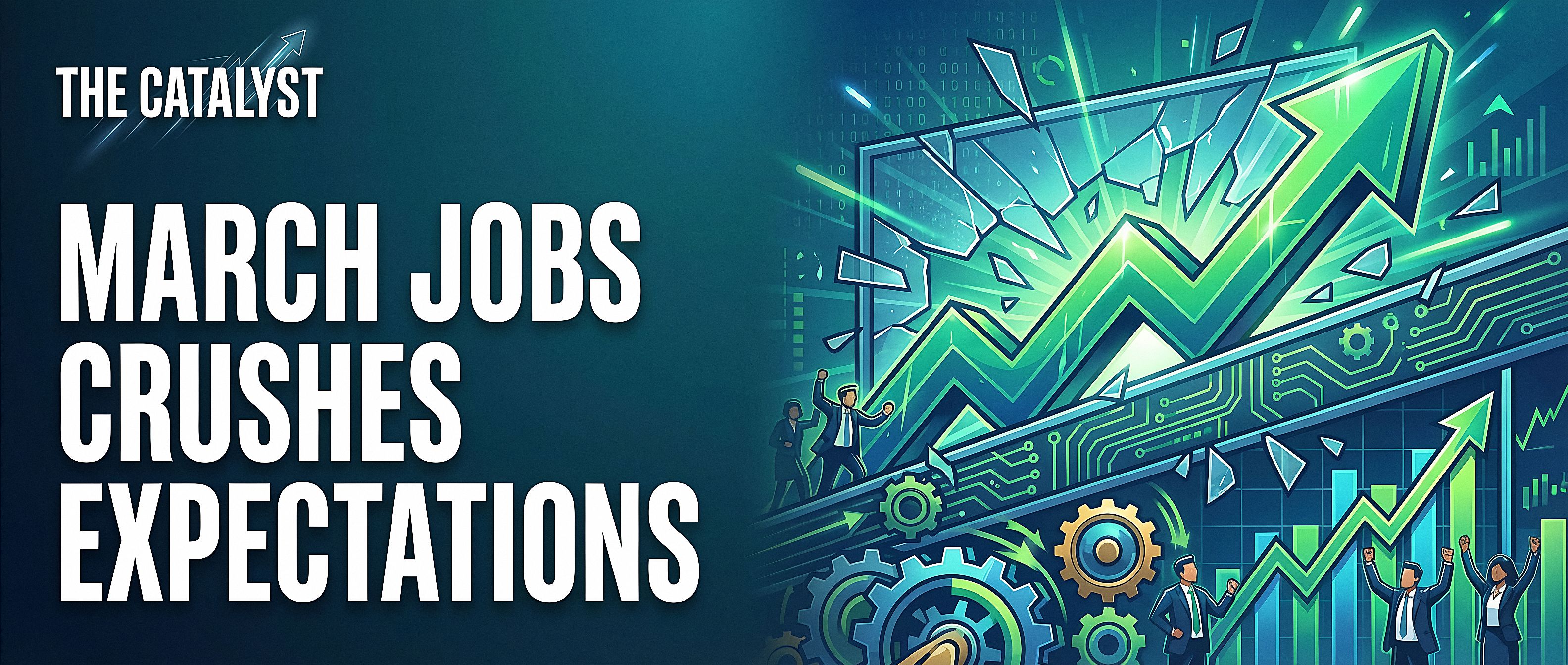
The U.S. economy added 178,000 jobs in March, tripling the Dow Jones consensus estimate of 59,000 and erasing February's revised loss of 133,000.
On paper, it's the kind of number that suggests resilience.
Below the surface, the picture is murkier.
Healthcare carried much of the weight, adding 76,000 jobs (nearly half the total gain).
A chunk of the rebound also came from the end of the Kaiser Permanente strike, which returned roughly 30,000 workers to payrolls.
Strip those two factors out and you're looking at a much thinner report.
The labor market's soft spots were hard to miss. Average hourly earnings rose just 0.2% for the month and 3.5% year-over-year, the slowest annual wage growth since May 2021.
The unemployment rate ticked down to 4.3%, but that was largely because the labor force shrank rather than because more people found work. The labor force participation rate slipped from 62% to 61.9%, its lowest since late 2021.
Meanwhile, the number of long-term unemployed (those jobless for 27 weeks or more) sits at 1.8 million, up 322,000 over the past year.
The Bureau of Labor Statistics reported that women aged 25 to 54 hit a record-high participation rate in March, a bright spot in an otherwise mixed picture.
For the Fed, this report changes almost nothing.
The CME FedWatch tool shows a 99.5% probability that rates stay at 3.5% to 3.75% at the April meeting. Bond traders ended the week betting the Fed holds all year. The March dot plot pointed to just one cut in 2026 and another in 2027, and Friday's data gave no reason to speed that up.
With WTI above $111 and the first war-era CPI print coming next Friday, the Fed is stuck: too much inflation risk to cut, not enough labor market weakness to justify it yet.
What to watch: Monday's market reaction. U.S. stocks and bonds were closed Friday for Good Friday, so the jobs data hasn't been priced into equities yet.
A strong open could extend the rally, but the real test comes Friday with the March CPI report (the first to reflect $4-plus gas prices at the consumer level).
RATE TODAY’S EDITION
What did you think of today's newsletter?Let us know what you liked, what you didn't, and what you'd like to see in future editions. |
⚠️ Disclaimer: Not financial advice. Do your research before making any trades.